Introduction of Agentic AI Development
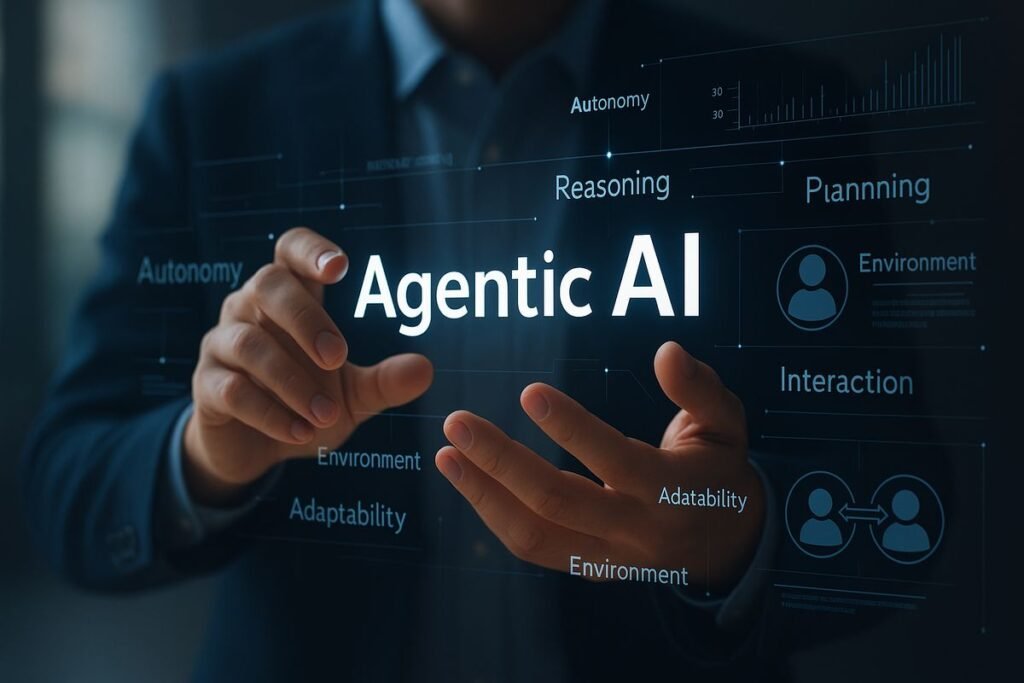
Agentic AI development focuses on developing autonomous systems that move from passive conversation to proactive action by employing LLMs to perceive, reason, plan, and carry out multi-step tasks using tools.
With the purpose of handling complicated tasks autonomously, these AI agents enhance workflow automation through memory, tool integration, and human-in-the-loop supervision.
The following straightforward, practical examples make Agentic AI simple to comprehend: . “Plan a 5-day trip to Turkey under $1200,” you say. The AI
1. Looks up flights
2. Evaluates hotels
3. Plans a daily schedule
4.Purchases hotels and tickets
5.It makes decisions, weighs possibilities, and finishes things automatically. It also sends confirmation emails.
The reason it’s agentic
It takes action to accomplish the goal rather than only making suggestions.
2. Self-sufficient Customer Service Representative For instance, a client may claim, “My package hasn’t arrived.”
1. The AI agent will examine the order database.
2. Monitor the shipment
3. Get in touch with the shipping system
4. Provide a replacement or refund
5. Provide up-to-date delivery information
Advantages of Agentic AI :
Autonomy and Proactive Execution:Unlike conventional AI, agentic systems operate independently to fulfill objectives. They can start tasks, evaluate information, and make choices without needing constant human supervision. Complex Workflow Automation: Agents are adept at managing multi-step procedures across various fields such as HR, finance, and supply chain. Continuous Improvement and Learning: By utilizing reinforcement learning and feedback loops, these systems enhance their accuracy over time by learning from results. Enhanced Efficiency and Reduced Costs: Organizations may experience a 40-60% decrease in manual tasks and reduced operational expenses. Enhanced Decision-Making and Agility: Agentic AI is aware of context and employs real-time feedback to quickly adjust to new circumstances, surpassing traditional, rule-based systems. Improved Memory and Context:Agentic systems utilize long-term memory to remember previous interactions and apply this knowledge to future tasks, resulting in more customized outcomes. Operational Scalability: Agents are capable of managing large-scale operations as needed..
Aspects of Agentic AI:
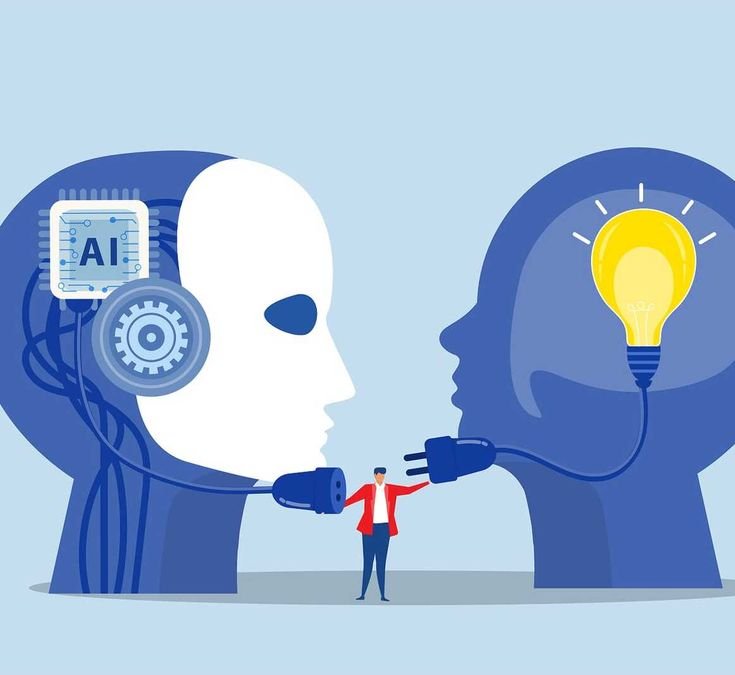
Artificial intelligence is divided into four primary areas: machine learning (systems that learn from data and get better over time), Natural language processing, which comprehends and produces human language; computer vision, which interprets visual data from pictures and videos; robotics with expert systems, which combines physical.
How does agentic AI work?
Step 1: Identifying & Gathering data
Before agentic AI can act, it must first collect and process information from its environment. It pulls data from multiple sources, including databases, APIs and real-time sensor feeds, developing a broad and up-to-date understanding of the task at hand. During this phase, it identifies key patterns, filters out irrelevant details and organises information so that it can be properly reviewed.
Step 2: Reasoning
Once the AI has processed the data, it moves into the reasoning phase. At this stage, it identifies patterns and evaluates relationships between data points. It may compare current conditions to historical trends, assess risks or calculate probabilities; this allows it to refine its understanding before selecting the next course of action.
Step 3: Building a plan
Rather than executing an action immediately, agentic AI structures its tasks into a logical sequence. It prioritises steps, considers potential obstacles and determines the most efficient way to proceed. The system may also choose to revise its approach in response to changing conditions, ensuring that planned actions remain relevant. Dependencies between tasks are evaluated to prevent conflicts or inefficiencies.
Step 4: Taking action
Once a plan is finalised, agentic AI executes tasks through direct system interactions. It may adjust configurations, trigger automated processes or request approval when necessary. Actions are carried out based on predefined policies to maintain accuracy and compliance. If unexpected results occur, the AI can pause execution and escalate issues for review. Built-in safeguards ensure that AI-driven actions remain aligned with business requirements.
Step 5: Learning
After completing a task, agentic AI reviews the outcome to determine whether additional adjustments are needed. It incorporates feedback from system logs and user interactions, and if errors or inefficiencies are detected, the AI updates its decision-making process for future scenarios. Over time, this iterative learning allows it to refine its performance without requiring manual reprogramming. A continuous feedback loop ensures that improvement is ongoing.
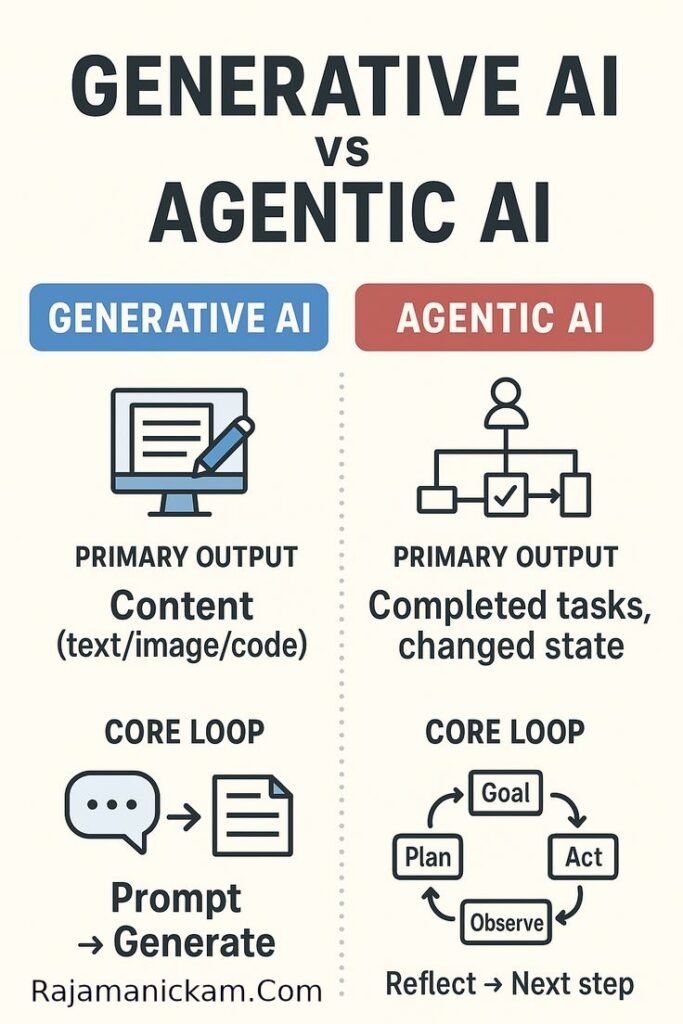
Agentic AI VS Generative AI:
- Autonomy & Goal-Driven:Generative AI has low autonomy, requiring step-by-step user input. Agentic AI operates with high autonomy, needing only an objective to, for example, manage a whole project or resolve a complex, multi-step workflow.
- Action vs. Content Creation:GenAI excels at producing content like emails, reports, or images Agentic AI focuses on action—such as updating databases, communicating with users, or setting up security workflows.
- Workflow Handling:GenAI is generally suited for single, immediate tasks. Agentic AI is designed for complex processes requiring planning, memory, and continuous, multi-step action.
- Dependency:Agentic AI systems often use GenAI internally to generate text or code, but then take the next step to organize and execute.
Conclusion:
Agentic AI development is changing the way we use technology. Unlike traditional AI that only responds to commands, agentic AI can think, plan, and take actions on its own to complete a task. It doesn’t just give suggestions—it actually works toward achieving a goal.
With features like memory, learning, and tool usage, these systems can handle complex tasks step by step. For example, they can plan trips, manage customer service issues, or automate business workflows without needing constant human help. This makes work faster, easier, and more efficient.
As more companies start using agentic AI, it will play a big role in the future of automation and smart decision-making. However, it’s still important to keep human control and proper checks to make sure everything works safely and correctly.
In simple words, agentic AI is taking AI to the next level. It is turning machines from simple helpers into smart systems that can act and solve problems on their own.
What is agentic AI development?
Agentic AI development refers to creating AI systems (agents) that can act independently, make decisions, and complete tasks without constant human input.
.
How does agentic AI work?
Agentic AI works by combining large language models (LLMs), memory, planning, and tools to perceive information, make decisions, and execute tasks step by step.
What is the difference between agentic AI and traditional AI?
Traditional AI responds to user inputs, while agentic AI is proactive—it can plan, take actions, and complete multi-step tasks on its own.